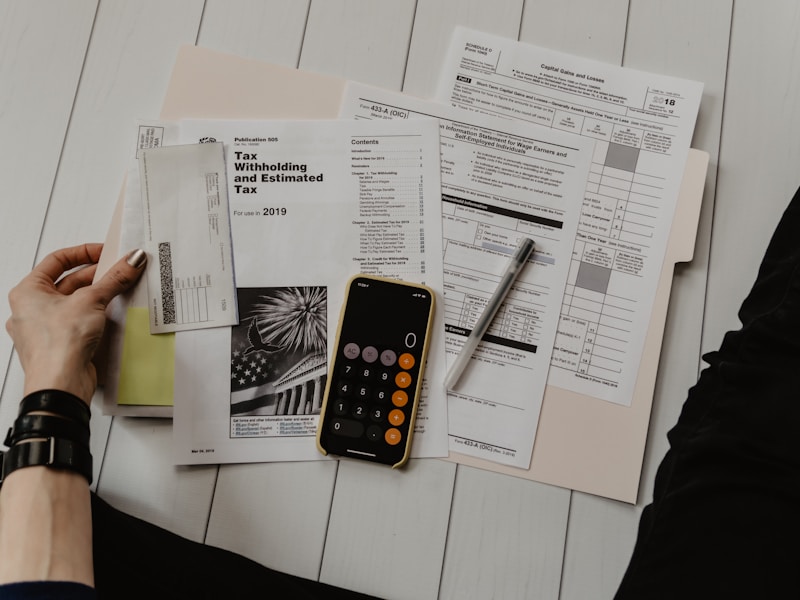
What a CSR budget buys in disability inclusion: the itemised breakdown
CSR committees approve units and outcomes, not intentions. Here is the unit of disability-inclusion CSR in India: one funded SMARTON Kit equips one named blind person — and every budget, from a pilot cohort to a multi-state programme, is quoted transparently against that unit.
SMARTON Team
Author
Every CSR proposal eventually faces the same committee question: "What does our money actually buy?" Projects that answer in units and outcomes get approved; projects that answer in adjectives get deferred. This article itemises what a corporate CSR budget achieves when it funds AI-powered assistive technology for blind and visually impaired (BVI) people in India.
Quick answer (TL;DR)
- The unit: one funded SMARTON Kit equips one named BVI person — AI camera glasses plus the full app: education, reading, currency recognition, daily news and entertainment, with onboarding and support included.
- Budgets scale linearly: a pilot cohort through one NGO partner, a district-level cohort with train-the-trainer sessions, or a multi-state programme with a 3-year roadmap — the same unit, quoted transparently at every scale.
- Pricing is by customised quotation — scoped to cohort size, hardware mix (app-only or full Kit), geography and support depth, returned within 2 business days with per-beneficiary costing.
- Every engagement reports the same exportable metrics quarterly: activations, logins, documents read, AI Tutor sessions, audio episodes consumed.
Why "per beneficiary" is the right frame for CSR
Under the Companies Act 2013, qualifying companies must spend 2% of average net profits on CSR — and report on it. That turns every CSR head into a portfolio manager: finite budget, board-visible outcomes, audit exposure. A project that states its unit economics up front ("₹X = Y beneficiaries × Z months, measured by A, B, C") is doing the CSR head's committee work for them. One that doesn't is asking the CSR head to defend a blank. SMARTON puts that arithmetic in every quotation — transparent per-beneficiary costing your committee can interrogate line by line.
What every funded kit includes
| Component | What it is | Why it matters to your committee |
|---|---|---|
| AI Camera Glasses | Lightweight (54 g) wearable with 8MP camera, dual speakers, noise-reduction mic | Hands-free independence — not another phone app that goes unused |
| SMARTON App | AI Tutor, Document AI, currency & object recognition, daily audio news, entertainment — 50+ languages, offline-capable | One integrated platform covering education, work and daily life |
| 4-stage onboarding | Kit handover, first-use training call within 72 hours, day-14 check-in, ongoing support — by a visually impaired support team | Kills the classic audit finding: "devices delivered, not used" |
| NGO delivery | Distribution and community integration through 50+ named NGO partners | Last-mile reach corporate programmes can't build alone |
| Quarterly reporting | Per-user engagement data, SDG-aligned metrics, co-branded summaries | Audit-ready evidence for your CSR annual report |
The full inclusion list, delivery model and partnership benefits are in the SMARTON CSR Partnership Guide (12-page PDF); scoping starts on the CSR partnership page.
What one funded kit changes for one person
A funded kit is not an app licence — it's daily capability:
- A student uses the AI Tutor and Document AI to study textbooks, notes and exam papers independently — in their own language.
- A working adult reads printed letters, bank documents and government forms without waiting for sighted help, and identifies currency offline.
- Everyone gets daily audio news and original audio entertainment — inclusion isn't only utility.
Support matters as much as software: onboarding and helpline support come from SMARTON's India-based team, which includes visually impaired support staff — in Hindi and regional languages.
Software-plus-support vs one-time device donation
Traditional assistive-technology CSR often buys hardware: canes, magnifiers, single-purpose devices. Hardware has its place — but committees should compare structures, not just prices:
| Dimension | One-time device donation | Platform + support (SMARTON model) |
|---|---|---|
| Impact window | Ends at handover (usage rarely tracked) | 12 months of measured, sustained usage |
| Audit evidence | Delivery photos, invoices | Quarterly utilisation data, exportable |
| Scope | One function per device | Education + reading + independence + inclusion in one |
| The classic audit finding | "Devices delivered, not used" | Usage is the metric, so non-usage is visible and fixable |
The strongest programmes combine both — e.g., smart-glasses bundles for power users within a wider app deployment. See the VI Inclusive Package for the hardware option.
What gets measured (and lands in your report)
- User activations and monthly logins
- Documents read with Document AI
- AI Tutor learning sessions
- Audio news and entertainment episodes consumed
- Support interactions resolved
All exportable, quarterly, formatted for CSR annual reports and audit files — the reporting mechanics are covered in CSR impact reporting for disability programmes.
FAQ
How much does one beneficiary cost?
Per-beneficiary cost depends on cohort size, hardware mix (app-only or the full Kit with glasses), geography and support depth — so SMARTON provides it as a customised quotation with transparent per-beneficiary costing, returned within 2 business days of your enquiry.
Is there a minimum CSR budget to start a disability-inclusion programme?
No hard minimum — engagements start from pilot cohorts and scale to multi-state programmes. Every proposal is sized to your budget and objectives.
Does this qualify under Schedule VII?
Yes — under Schedule VII (ii) (education, including special education and vocational skills for the differently abled) and (iii) (reducing inequalities faced by socially and economically backward groups). Written sub-clause confirmation is provided with every proposal. Details in the CSR due-diligence checklist.
Next step: take a budget number to the CSR partnership page, or request a proposal with impact projections for your specific amount.
Tags
Found this helpful?
Share this article with others who might benefit from it.
More Articles

The CSR head's 20-minute due-diligence checklist for disability-inclusion projects
Before any disability-inclusion project reaches your CSR committee, five questions must have verifiable answers: Schedule VII fit, partner credibility, unit economics, co-branding, and multi-year viability. Here is the checklist, in the order you'll be asked.
CSR impact reporting for disability programmes: what your board actually wants
A CSR head isn't buying a product — they're buying a story they can tell the board. Here's what audit-ready impact reporting for a disability-inclusion programme looks like: the quarterly metrics, the annual-report narrative, and the documents your auditor will ask for.